Blender
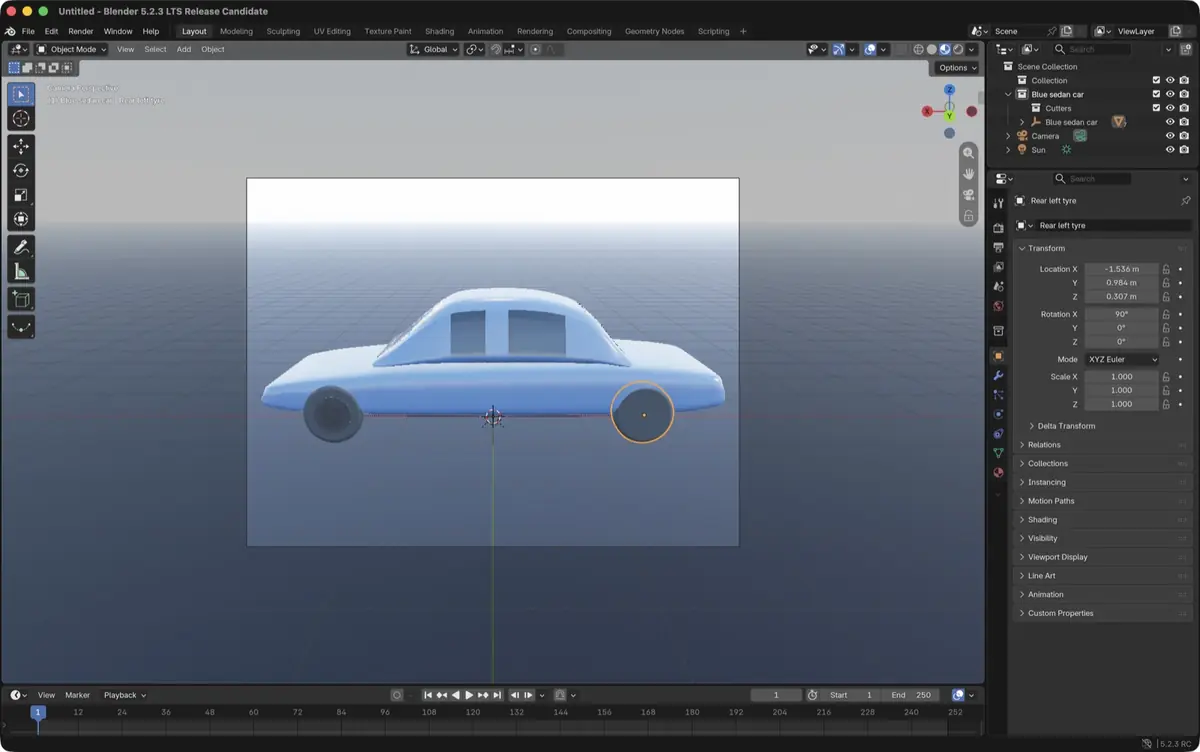
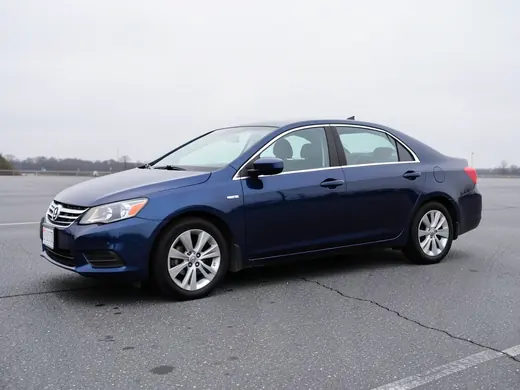
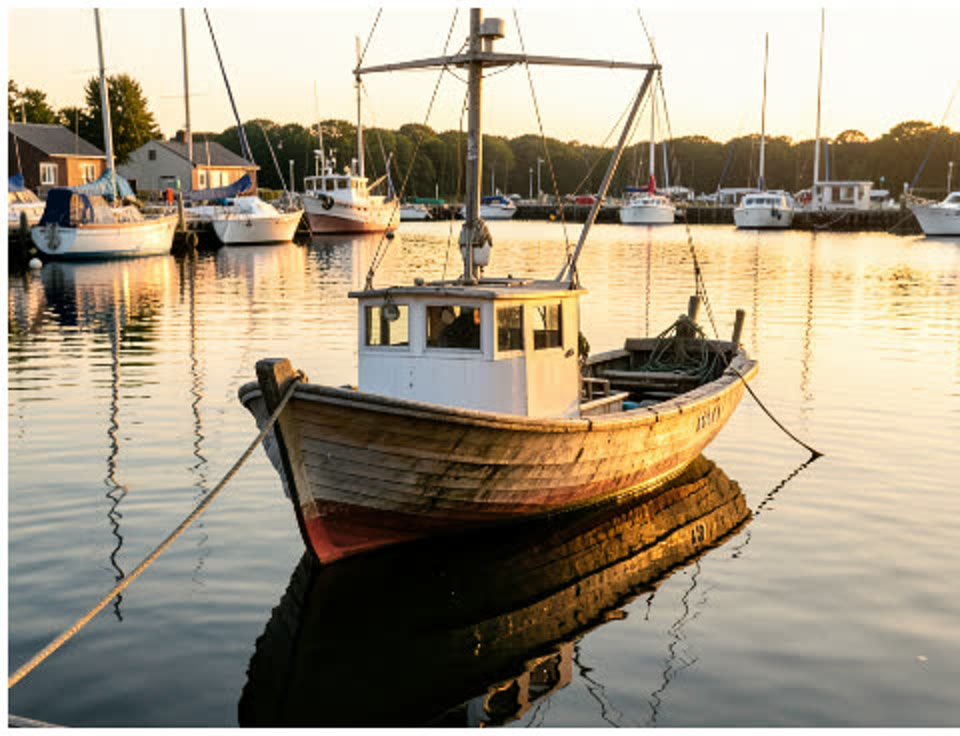
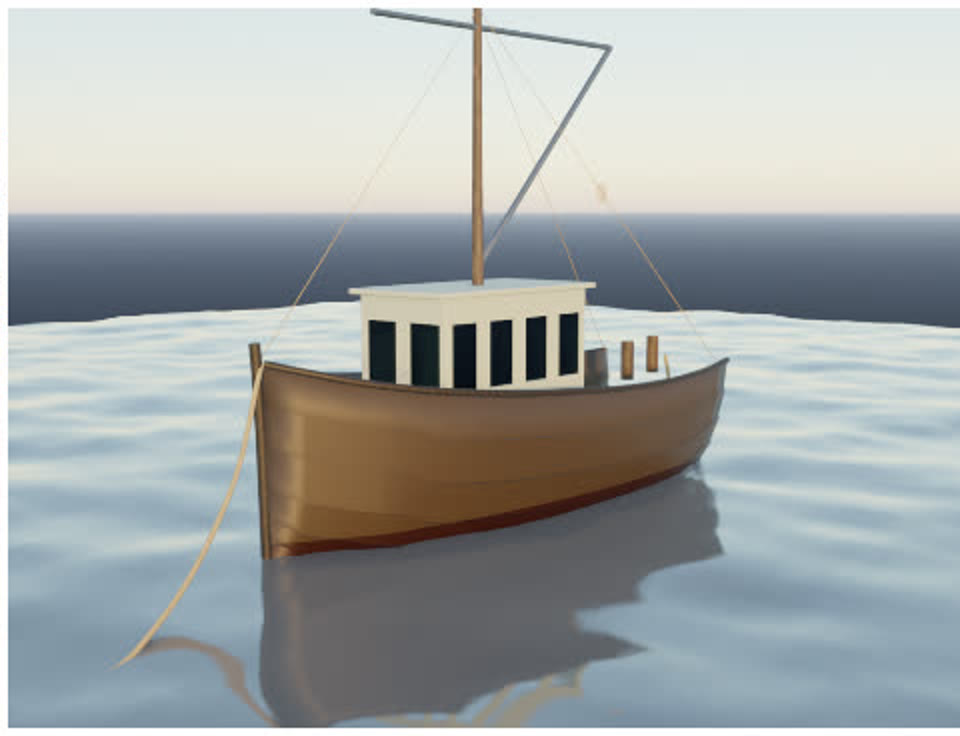
Modelled the way a 3D artist works: lofted hulls and bodies, turned profiles, cut-out windows, node materials, real-world scale. Today it plans boats, turned objects, towers and vehicles; more kinds of object are coming. On four labelled test references the models match the subject’s outline 82% on average.2
Photoshop
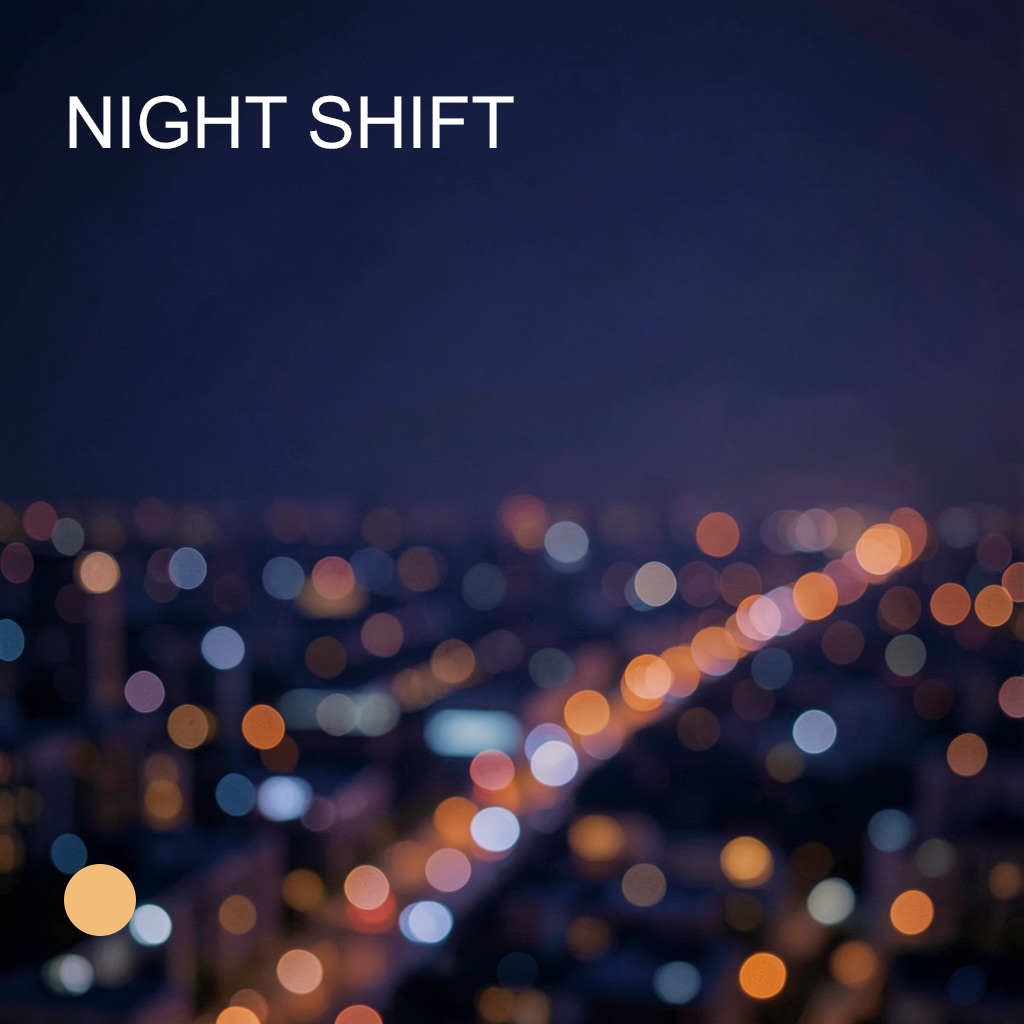
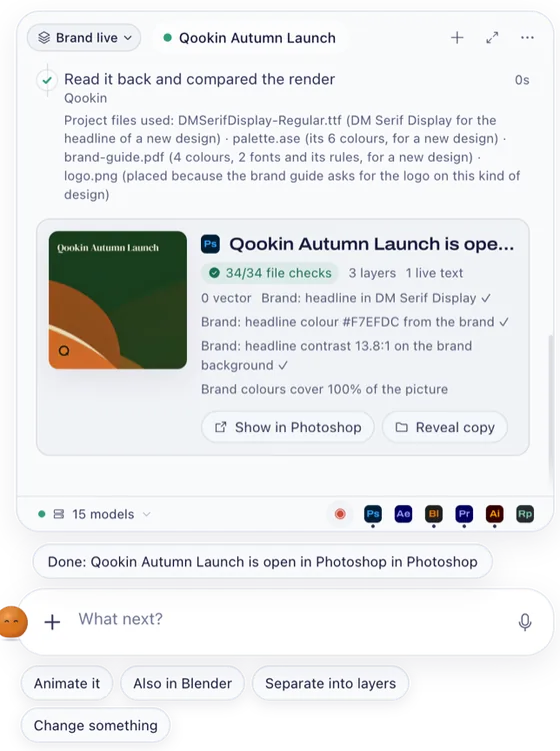
Live text in the right font, vector shape layers, smart objects with real masks, layer groups. Give it a flattened poster and it rebuilds the headline as live text over a clean plate, to within a third of a pixel of the original type size.3 Drag the line to compare.
Illustrator
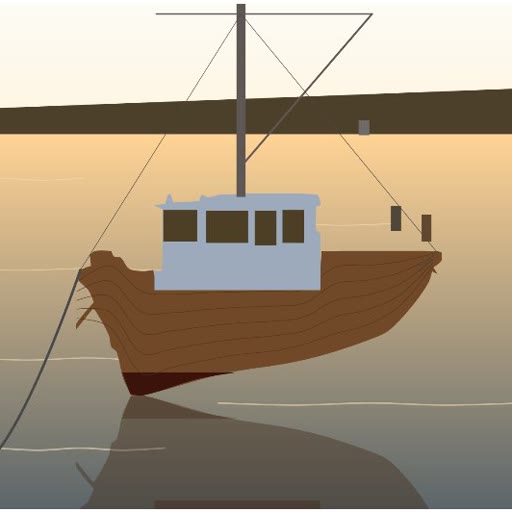
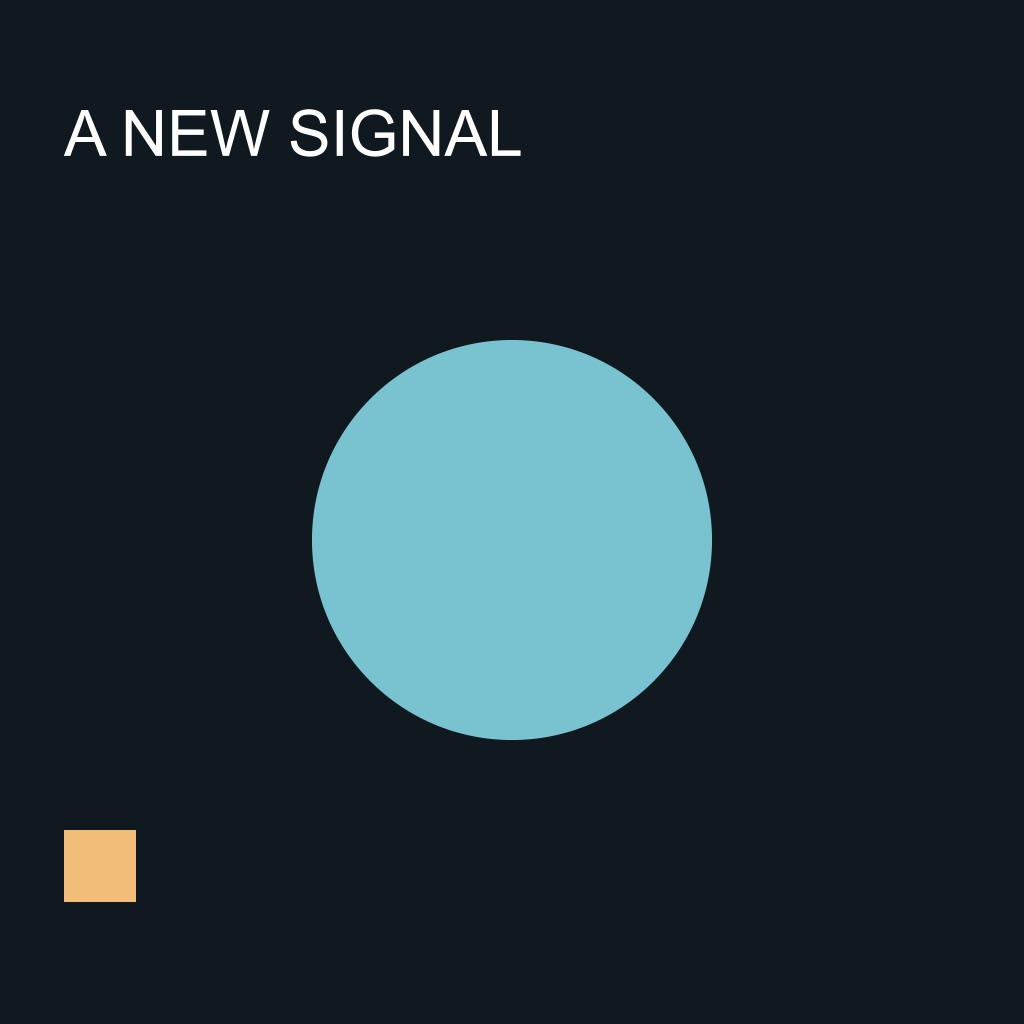
Drawn from scratch over your reference: clean bezier outlines with few anchor points, colours as global swatches and gradients, named layers. No auto-trace.
After Effects
Shape layers rigged and animated with editable expressions, effects rebuilt from a clip with native effects and keyframes, and web animations rebuilt from the page’s own keyframes and easing: one test page came out 99% like the original, frame for frame.4
Premiere Pro
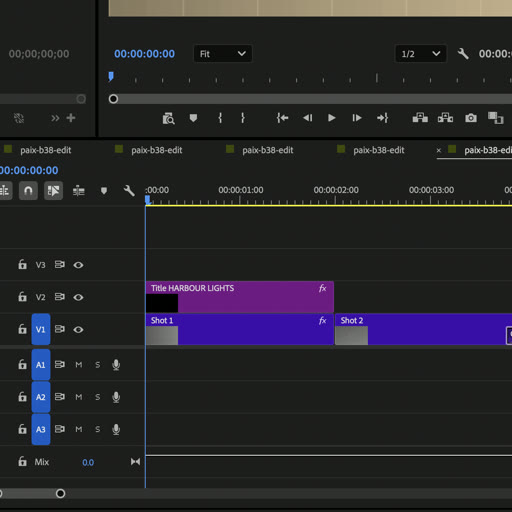
A finished edit recut natively: shots on the timeline to the frame, Cross Dissolves, a Lumetri grade and Scale keyframes per shot, live titles. All 19 of 19 checks read back from Premiere as planned.5
REAPER
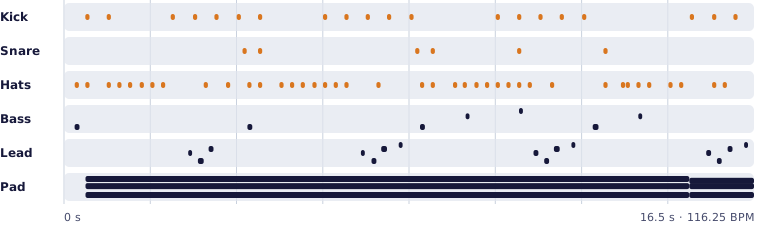
Audio references rebuilt from scratch: tempo and key heard, drums programmed, bass and chords as MIDI on stock synths, a mastering chain, then render, compare and adjust. On a real recording the rhythm, harmony and loudness came close; tone is the honest limit, because stock synths can’t sound like a slap bass.6